
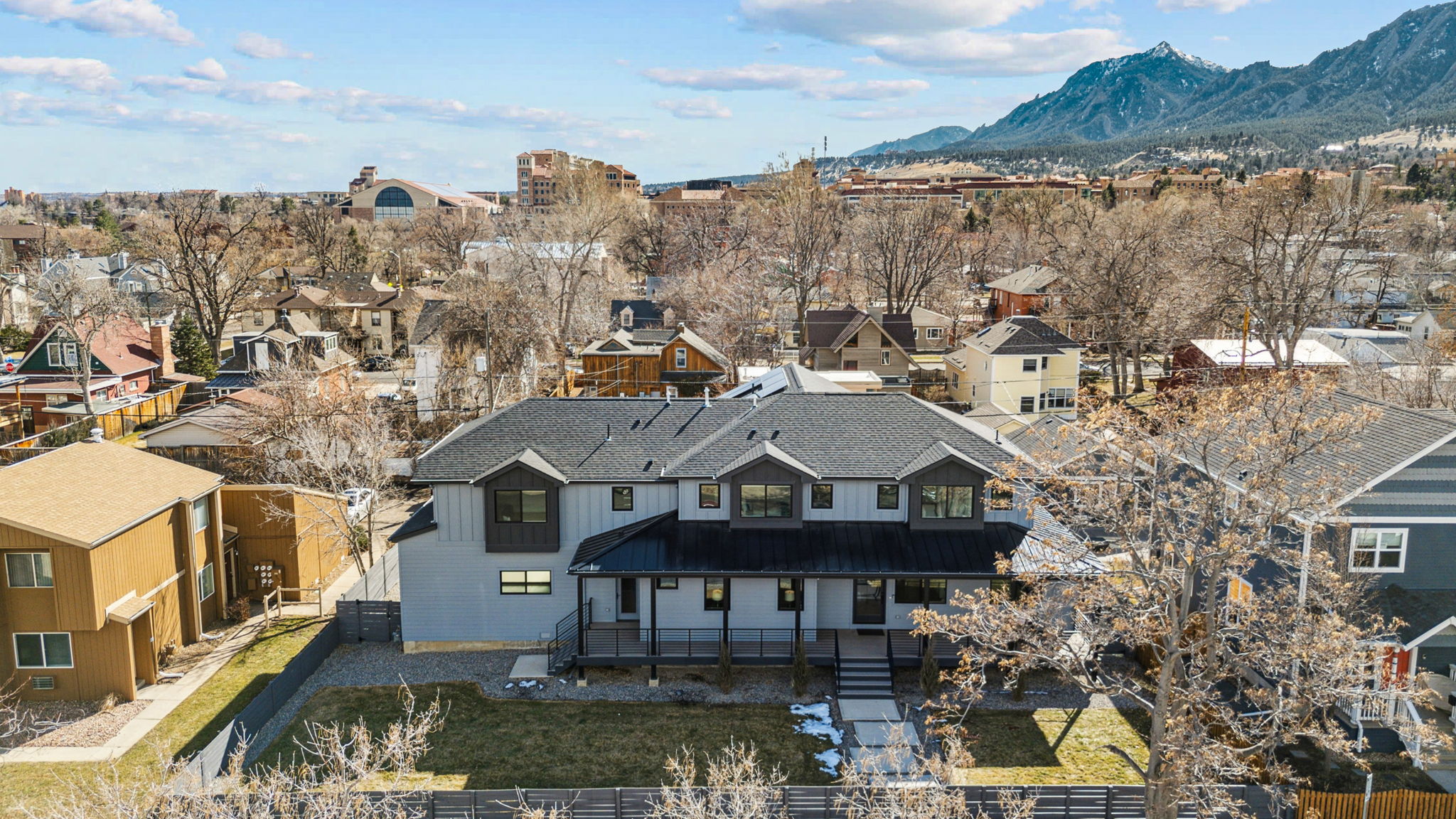
A buyer who could afford a $1.02 million home a year ago can now only afford about $910,000, with the same income, savings, and monthly payment. The buyer hasn’t changed. Interest rates have.
And they may not be done moving. In September, the Federal Reserve raised its benchmark rate for the first time since July 2023. On October 28, it held that rate at 3.75%–4%, with two officials voting for another increase and most forecasters expecting one in December.
It’s simple: when rates go up, buyers can afford less, and home values feel the pressure. When rates drop, buyers can pay more, so values tend to rise. But in Colorado right now, it’s not following that script exactly.
Rates Set Purchasing Power
Most buyers don’t shop by price. They shop by monthly payment. So when borrowing costs change, the amount a buyer can pay for a home changes with them, even if their income and savings stay the same.
Here’s the math behind that opening example. Say a household is comfortable with $5,000 a month in principal and interest and plans to put 20% down:
- At 6.19%, where the 30-year fixed rate stood a year ago, that payment supports a loan of about $817,000, or roughly a $1.02 million home.
- At 7.32%, Freddie Mac’s most recent weekly average, the same payment supports a loan of about $728,000, or roughly a $910,000 home.
That’s about $110,000 less house for the same monthly budget—a roughly 11% drop—before factoring in property taxes, insurance, or HOA dues. Multiply that impact across an entire market, and it’s clear why rates matter so much to home values.
The Fed Doesn’t Set Your Mortgage Rate
Here’s where it gets less intuitive. The Fed controls a short-term, overnight rate. A 30-year mortgage is priced off the 10-year Treasury yield plus a spread, which means the bond market has as much say as the Fed. Bankrate notes that after the Fed cut rates three times in late 2024, mortgage rates stayed high and even rose.
This year showed the same pattern in reverse. Mortgage rates dipped close to 6% early in 2026, then climbed ahead of the Fed’s September move as Treasury yields rose. By mid-October, the 30-year average reached 7.40%, its highest level since November 2023. When the Fed held steady in late October, housing economists cautioned that a pause alone does little to lower mortgage rates.
The takeaway: While Fed headlines grab attention, it’s inflation and the 10-year Treasury yield that actually move the mortgage payment a buyer sees.
So Why Haven’t Prices Fallen 11%?
If purchasing power dropped that much, you might expect home prices to follow. They haven’t, at least not on paper.
According to the Colorado Association of REALTORS’ September report, statewide sales fell 15.1% from a year earlier and Denver metro sales fell 18.7%. Yet the statewide median price was $540,000, down just 1.6%. Closer to home, single-family prices across the Boulder Valley and Northern Colorado were mostly flat, with Longmont’s September median at $580,000, down less than 1%.
The reason is that higher rates don’t just reduce the number of buyers. They reduce the number of sellers, too. Nearly half of all outstanding U.S. mortgages, 49.1% as of mid-2026, carry a rate below 4%. Federal Housing Finance Agency research found that for each percentage point market rates sit above a homeowner’s existing rate, they are about 18% less likely to sell. Fewer buyers meet fewer listings, so prices hold while the number of transactions falls.
In other words, higher rates tend to impact the number of transactions before they noticeably affect prices.
That doesn’t mean values go untouched. The adjustment often happens beneath the headline number. In September, about 80% of Denver metro sales involved a price cut, a seller concession, or both. If a seller covers a buyer’s rate buydown or closing costs, they’ve effectively lowered the price—even if the median doesn’t reflect it.
And Vice Versa? Not Quite.
It’s tempting to assume the relationship runs the same in both directions: rates go down, values go up by the same amount. Lower rates do raise purchasing power, but they also loosen the lock-in effect. Owners who’ve been staying put start listing, and builders bring more homes to market.
In a supply-constrained market like Boulder County, though, the demand side usually recovers faster. Buyers who have been waiting can act as soon as rates drop. New homes take years to entitle, permit, and build. That’s why prices here tend to be sticky on the way down and quick to respond on the way up. Limited land, strict zoning, and high construction costs put a floor under well-located, well-built homes that more supply-abundant markets don’t have.
What This Means for You
If you own your home and plan to stay, rate swings change what your home might sell for on paper, not what you pay each month on a fixed-rate loan. What protects long-term value is what you control: condition, layout, efficiency, and how well the home works for the way you live. For many owners holding a low rate, a thoughtful remodel delivers more than a move would.
If you’re buying, today’s market gives you more room to negotiate than you’ve had in years. Concessions, price reductions, and rate buydowns are all on the table, and it’s worth asking your lender how each option affects your payment.
If you’re planning to build, remember that a custom home often takes a year or more from design to move-in. You’ll likely finance or close in a different rate environment than when you start, and nobody can promise which direction it will go. That’s why you should design for how you’ll live in the home for decades, not for a single rate cycle. A slower market also has real advantages for building: subcontractors are more available, schedules are more predictable, and decisions aren’t driven by artificial urgency.
The Bigger Picture
Interest rates are one of the strongest forces shaping property values, but they’re not the only factor. In Colorado right now, rates influence how many homes sell—and how much sellers must concede to close a deal. In Boulder County, the ongoing shortage of land and housing continues to support values for well-located, well-designed, and well-built homes.
Rates will move again. Homes that are done right tend to hold their value through those cycles. That’s the kind of work Chanin Development has always focused on.
If you’re weighing whether to build, buy, or remodel, and how today’s rates affect your timing, we’re happy to talk it through. Reach out to us here.